11 April 2022

Takdak sapa yang peduli kat Malaysia lagi...

 
Foreign ministry officials are believed to be fuming after Malaysia’s two senior diplomats in the United Arab Emirates were ordered home and put in cold storage for the lack of official “guest status” for the visit of Prime Minister Ismail Sabri Yaakob to the Emirates last month.

Sources in the know said the ambassador, Tarid Sufian, and the consul-general in Dubai, Hasril Abdul Hamid, were the only senior officers present at the airport to receive Ismail when he landed in Dubai.

Leaked audio dari Wisma Putra

There were no top UAE officials present, unlike the usual protocol for a senior minister of the host country to be officially assigned to receive foreign dignitaries. They really don’t give Sabri face. There is no top UAE officials were at the airport to receive Ismail Sabri Yaakob on March 29 when he landed in Dubai.- fmt


Din should  just press 
another button if not consulted...

PN must be consulted on dissolution, Muhyiddin tells PM. The PN leaders had a meeting with Ismail Sabri Yaakob at his residence after breaking fast with him. Perikatan Nasional chairman Muhyiddin Yassin has told Prime Minister Ismail Sabri Yaakob that the coalition must be consulted before any date is fixed for the dissolution of Parliament.

In a Facebook post, Muhyiddin said he conveyed this to him at a meeting between the PN leaders and Ismail at the prime minister’s residence yesterday, after breaking fast with him.“Besides discussing matters important to the rakyat, I reminded the prime minister that PN, as the main party in the federal government, must be consulted before any decision is made on the dissolution of Parliament,” he said.

The Bersatu president said Ismail emphasised the importance of cooperation between PN and the federal government, adding that he assured the leaders that the coalition would be consulted when drawing up important national policies. Those present at the meeting were PAS president Abdul Hadi Awang, STAR head Jeffrey Kitingan, SAPP chief Yong Teck Lee and Gerakan president Dominic Lau.

Speculation has been rife that the next general election (GE15) is likely to be called by the end of the year, with some predicting it will be held in four to six months. A group of Umno leaders is pushing for early elections while PN and Pakatan Harapan do not appear to be eager to have it anytime soon. - fmt

Kampung Baru residents heartbroken 
over eviction notice near Ramadan...

Amid the hustle and bustle of Ramadan preparations, the residents of Pangsapuri Sungai Baru in Kampung Baru were shocked to receive eviction notices three days before the start of the fasting month. When contacted, a resident representative said he had not yet received full compensation for the eviction but was still forced to vacate his house.

“The flat residents were notified of the K forms (eviction notices) on March 22. But the form only reached the hands of the residents on April 1.

"The problem is, when the residents received a notice on April 1, it was three days before the start of fast. Should this letter have been issued during a time when the residents are celebrating Ramadan?" the representative who wished to only be identified as Ibrahim lamented. He said that residents should be given due time and a discussion involving all parties needs to be held before forcing them to vacate their homes.

They were ordered to do so as part of the Kampung Sungai Baru land acquisition process for a redevelopment project which started in 2016 involving 67 units of terrace houses and 14 apartment blocks (264 apartment units) known as Pangsapuri Sungai Baru.


Compensation too low

Last July, residents received a letter under Section 8 of the Land Acquisition Act 1960 which forced them to leave the land with provided compensation. However, the residents, especially the occupants of the terrace houses did not agree with the compensation rate of RM400 per square foot - which was set by the Federal Territory Lands and Mines Office.

To date, 37 terrace house residents have disagreed with the compensation rates, while 27 other occupants agreed to the offer. Kampung Sungai Baru Kuala Lumpur Property Owners Welfare Association chairperson Zulfakar Wahib said that almost 85 percent of the flat residents have agreed to move. However, Ibrahim denied Zulfakar's statement and called it incorrect.

"Generally, the residents are ready to move if they are given appropriate compensation.

“We were told that the value of the land here is around RM1,000 to RM1,500, but the offer is only RM400 (per square foot).

“When we asked for a discussion, they used the gazette to forcibly evict us,” he said.

Last Wednesday, residents received an eviction notice which they claimed asked them to vacate their homes within 42 days.

Federal Territories Minister Shahidan Kassim

Letter to FT minister

Kampung Sungai Baru Terrace House Owners Action Committee chairperson Lily Suzana Kudari said terrace house residents had sent a letter to Federal Territories Minister Shahidan Kassim to withdraw the Section 8 gazette on terrace houses.

"We wrote a letter to the minister to withdraw the gazetting of Section 8 on terrace houses. There was a precedent and it happened during former premier Najib Abdul Razak's time.

"We want to appoint an independent appraiser to appraise our properties to prove that the evaluation by the Valuation and Property Services Department is very low," she told Malaysiakini.

According to Lily, the letter was written on March 22. She added that they intend to work with the Malaysian Land Professionals Organisation (Pertama) on the matter.

"We will ask Pertama to value our properties and conduct a social impact study on the owners from the impact of the redevelopment," she said. - mk

Last time PH offers RM800++ Psf, Umno ajak penduduk reject, sekarang offer RM400psf, so, APA masalah, terima je-lah. - WTB

Ini lah kerajaan pintu belakang BN/PN/PAS yang heboh mengatakan melindungi rakyat khasnya orang Melayu.- Penganalisa Politik

Why complain? You asked for it! You guys always talk of electing a corrupted R&R is better than a non corrupt non MM. They throw crumbs at you while taking the chunks for themselves yet shamelessly you guys support them. 1 MDB is a good example. The culprit is still being placed on a pedestal and being followed like the pied piper. - YellowGopher7568

cheers.

10 April 2022

Dalam diam2 kita dibanjiri warga Bangla lagi...

Lepaih tu depa buka kedai,niaga kat pasar,jadi k/tangan Majlis Daerah dsbnya.
Bapak segala bangla masih ada,dok kelupoq nak lepaihkan diri dari kes2 mahkamah...

Nak tau juga atas arahan sapa?...


Roger Ng convicted of bribery,
money laundering charges in 1MDB case...

Former Goldman Sachs banker Roger Ng was convicted by a US jury on Friday of corruption charges related to his role in helping loot hundreds of millions of dollars from Malaysia's 1MDB development fund.

The charges stemmed from one of the biggest financial scandals in history. Prosecutors charged Ng, Goldman's former top investment banker for Malaysia, with conspiring to violate an anti-corruption law and launder money. They said he helped his former boss Tim Leissner embezzle money from the fund, launder the proceeds and bribe officials to win business for Goldman.

Ng, 49, had pleaded not guilty to the charges. His lawyers say Leissner, who pleaded guilty to similar charges in 2018 and agreed to cooperate with prosecutors' investigation, falsely implicated Ng in the hopes of receiving a lenient sentence.

The jury convicted Ng of two counts of conspiracy to violate the Foreign Corrupt Practices Act (FCPA) through bribery and circumvention of Goldman's internal accounting controls, as well as one count of conspiracy to commit money laundering.

"Today's verdict is a victory for not only the rule of law but also for the people of Malaysia," Breon Peace, the US Attorney for the Eastern District of New York, said in a statement. "The defendant and his cronies saw 1MDB not as an entity to do good for the people of Malaysia, but as a piggy bank to enrich themselves."


Ng, wearing a black suit jacket and black tie, showed little emotion as the jury's foreperson read out the verdict. Ng glanced back and forth between the jury and the desk he was seated at. His lawyer, Marc Agnifilo, hung his head after the guilty verdict to the first count was read.

US district judge Margo Brodie, who is overseeing the case, ordered that Ng be subject to a curfew pending sentencing, but said she did not consider him a flight risk. Deliberations began on Tuesday after a nearly two-month trial in Federal Court in Brooklyn.

Agnifilo said Ng may appeal, depending on the outcome of his post-trial motions and his sentence. He stood by his decision to convince Ng to waive extradition to face trial, saying he had a better chance of a fair trial in the United States than in Malaysia. "These big cases are tough and they're hard to win," Agnifilo told reporters.

Prosecutors have said Goldman helped 1MDB raise US$6.5 billion through three bond sales, but that US$4.5 billion was diverted to government officials, bankers and their associates through bribes and kickbacks between 2009 and 2015.

Ng is the first, and likely only, person to face trial in the United States over the scheme. Goldman in 2020 paid a nearly US$3 billion fine and its Malaysian unit agreed to plead guilty.

Roger Ng and PAS...

Jurors heard nine days of testimony from Leissner, who said he sent Ng US$35 million in kickbacks. Leissner said the men agreed to tell banks a "cover story" that the money was from a legitimate business venture between their wives.

Ng's wife, Hwee Bin Lim, later testified for the defence that the business venture was, in fact, legitimate. She said she invested US$6 million in the mid-2000s in a Chinese company owned by the family of Leissner's then-wife, Judy Chan, and that the US$35 million was her return on that investment.

Agnifilo said in his closing argument on Monday that Leissner could not be trusted. Alixandra Smith, a prosecutor, said in her summation that Leissner's testimony was backed up by other evidence.

Jho Low, a Malaysian financier and suspected mastermind of the scheme, was indicted alongside Ng in 2018 but remains at large. - Reuters

Even brother Indonesia looks 
down on “Bahasa Melayu”...

Every Malaysian prime minister has his own signature concept or inspiration to build a legacy – or simply a gimmick to fish for votes. Najib Razak had introduced “1Malaysia”, a copy version of the “One Israel”. Claiming the concept was to bring Malaysians of all races to unity, Mr Najib had instead mobilized “Red Shirt” gangsters to terrorize minorities Chinese and Indian, including vernacular schools.
 
Muhyiddin Yassin’s version was “Kerajaan Prihatin” or a caring government. Yet, his short 17-month legacy will be known by historians as an era of SOP U-turns, policy flip-flops, double standards, incompetence, hypocrisy, corruption, Coronavirus mishandling, economic mismanagement and of course – illegitimacy. At the end, his regime was known as “Kerajaan Gagal” (failed government).
 
Ismail Sabri is now toying with “Keluarga Malaysia” (Malaysian Family), a slogan towards achieving harmony and prosperity for all people in the nation. Coming from a racist man who supported a thief just because he is a Malay caught stealing a smartphone from a Chinese trader at a shop in Low Yat Plaza, and even had set up “Low Yat 2” specifically for Malay traders, it is indeed laughable.

Unlike Najib, who could leverage on his father – “Razak” – legacy, and Muhyiddin’s “Malay First”, Ismail has no strong identity as a “Malay hero”. The Low Yat 2 business plan to empowering Malay vendors after racial riots at IT Mall Low Yat in 2015 has been a disaster. His advisers soon hatched a brilliant plan – make Bahasa Melayu or Malay language as the second language in Southeast Asia.
 
Extremely please with the new political product, Prime Minister Ismail Sabri proudly announced two weeks ago (March 23) that his unelected government will discuss with regional leaders to accept his new idea. He argued that only 4 out of 10 ASEAN countries use English in official events at the international level, while the rest 6 countries use their mother tongue.
 
He claimed that during his visit to Cambodia, he was informed there were 800,000 Malay-Chams who used Malay. In Vietnam, he said there were some 160,000 Malay speakers among those of Malay-Cham ancestry. He concluded that since Malay is also being spoken in Indonesia, Brunei, Singapore, Thailand, Philippines and Cambodia, there is absolutely no reason why Malay cannot become an official language of ASEAN.

In truth, turtle-egg Sabri can’t speak proper English. In fact, he is an accidental prime minister, who happened to be at the right time at the right place. Unlike former prime ministers Mahathir Mohamad and Najib Razak, he is in a lower league. He realized the challenge after one of his ministers tried to skip an international conference due to a poor grasp of English.
 

After being mocked and ridiculed, Environment and Water Minister Tuan Ibrahim reluctantly flew to Scotland in November last year to deliver his speech at the 26th UN Convention on Climate Change – in Malay language. Using Tuan Ibrahim as an excuse, PM Sabri ordered government officials to only speak Malay or Bahasa Malaysia when representing the country at functions overseas.

Actually, there’s nothing wrong about speaking in one’s mother tongue at an international conference or meeting. Vladimir Putin and Xi Jinping deliver their speeches in Russian and Chinese all the time. However, it’s one thing to speak in Malay at official events at the international level. It’s another thing altogether to demand that the language becomes a lingua franca by other countries.

Besides, how could the Malaysian leader convince neighbouring countries to speak the language when his own community – ethnic Malay – prefers English over Malay, or at least mixing both in daily life to show off one’s status? In fact, despite screaming about Malay supremacy, senior ministers of the ruling party UMNO are not proud of their own Malay language.

Rais Yatim, president of Dewan Negara (Upper House), named his four children as Malini Rais, Dino Rais, Danni Rais and Ronni Rais – clearly not Malay names. Nazri Aziz, a former minister who criticised Kuala Lumpur for having too many street names and buildings in English, has not only named his son “Jean Pierre Azize”, but also enrolled the 5-year-old junior in a French school in France.

But Sabri’s political stunt was a non-starter and DOA (dead on arrival) when Indonesia instantly shot it down. Indonesia’s minister of education, culture, research and technology, Nadiem Makarim, has rejected the idea to use Malay language – even between both countries, which supposedly are part of the same Malay Archipelago and share common historical roots, cultural heritage and religion.

Nadiem said the rejection was made known to Ismail Sabri during his brief working visit to Indonesia last Friday (April 1). The clueless Malaysian prime minister might have mistaken it as an April Food joke, but the Indonesian minister has made it clear that it should be Indonesian language – not Malay language – that should be the appropriate choice as the official language of ASEAN.

He lectured that contrary to PM Ismail’s claim, it is Bahasa Indonesia that has become the most widely-spoken language in Southeast Asia. Compared to Sabri’s weak and dubious justification that the Malay language is being spoken in 6 out of 10 ASEAN (Association of Southeast Asian Nations), Nadiem claims the Indonesian language extends to 47 countries around the world.

ASEAN Countries...

Adding salt to insult, Indonesia’s National Agency for Language Development and Cultivation chief Prof Endang Aminudin Aziz said the use of Bahasa Malaysia in Indonesia is more of a district language and not used nationally – suggesting that Indonesian language is superior than Malay language. Obviously, it was a slap in the face of PM Ismail Sabri.

In terms of populations, Indonesia has 280 million, while Malaysia has only 32 million. Even then, based on population estimates in 2015, despite being the largest ethnic group in the country, Malays form only 50.8% of Malaysia’s demographics. Not every Malaysian speaks the Malay language, but the same cannot be said about Indonesians.

This is not the first time that Malaysia has proposed using Bahasa Melayu as an official language in ASEAN. Back in 2017, former PM Najib made a similar proposal, but none of the neighbouring countries took it seriously. Every leader knew Sabri’s latest move is another nationalistic drama to score points on the domestic front, the same way Najib did it to deflect his 1MDB scandal.

There’s a reason why Article 34 of the ASEAN Charter states that the working language of ASEAN shall be English, and has remained so since its founding in 1867. It is to prevent any single country from pushing for a specific language as primary or secondary language, which would then attract dispute and competition from another country to do the same – precisely what PM Sabri is doing now.

ASEAN has more important issues to solve, rather than entertaining the Malaysian premier’s personal aspiration or populist endeavour. Issues such as the economic impact of Russia’s invasion of Ukraine, South China Sea dispute, Covid-19 pandemic and other bread-and-butter problems are more urgent than Mr Ismail’s silly appetite for playing language politics.

Essentially, if Ismail cannot even convince his own Indonesian brother to support his proposal to elevate Malay language within ASEAN, he should stop dreaming about making it as a lingua franca at the international level. Like it or not, this is a simple economics of supply and demand – the Malay language will automatically become official language when there is sufficient demand for it.
 
Instead of running around like a headless chicken, he should realize that one cannot force other nations to accept one’s mother tongue as if the world revolves around the Malays. The world has to accept it willingly, just like how Bahasa Melayu became the lingua franca in the Malay Archipelago in the 15th and 16th century, when Malacca was one of the trading centres between west and east.


Traders eagerly and voluntarily learned Malay language, leading to wider acceptance over time, because everyone wanted to trade and profit from the booming economy. The same economic prowess enjoyed by Malacca is the same reason why everyone, including Americans and Europeans, is willing to learn Chinese language today.

As Ismail government tries to shut down vernacular schools, did they know that ever since a Chinese language course started in 2006 in the UAE, the Chinese-language education has seen the number of enrollments increased from merely 20 students to a whopping 45,000 last year? The first Chinese school outside China was opened in Dubai in 2020. There are now 142 schools (Dec 2021) in the UAE offering Chinese language classes.

Likewise, wealthy Chinese readily splash top dollars to send their children in the U.S. and U.K. to master the English language in order to learn science and technology from the Western powers. People are willing to learn a foreign language because there’s something to gain or learn – either economically, technologically or cultural.

Foreigners wanted to learn Chinese because China is the second largest economy so they wanted to either do business or learn its 5,000 years of civilization. Chinese wanted to learn English not only because it could get them jobs in multinational companies or expand their business, but also because English is the language of science, aviation, computers, diplomacy and opportunity.
 
People also learn German because the language is the gateway to physics, engineering, medicine, chemistry and other world-class education. That’s why American pharmaceutical Pfizer depended on BioNTech, a Germany biotechnology company in the development of Covid-19 vaccines, not to mention why Islamist party PAS leaders love German-made Mercedes Benz so much.
 
It is the same reason why foreign workers – Bangladeshi, Pakistani, Burmese, and Nepalese – have no problems learning Bahasa Malaysia. Learning the local language is essential to getting jobs here. It’s their economic and survival necessities for them to master the Malay language. Perhaps the Malaysian prime minister has targeted the wrong market, and should approach these countries instead.

Foreign minister Saifuddin Abdullah should not have embarrassed the country by sending an official letter in Malay language to the US Secretary of State Antony Blinken. It was a dumb political stunt as the letter would go straight to the dustbin. This is not a rice cooker which you need a user manual in various languages for customers in different continents or countries.

So, can Ismail Sabri explain why ASEAN, let alone the world, should learn the Malay language? What are the values one can gain by learning Bahasa Melayu? Narrow-minded Malays may not like this, but once you step out of Malaysia, the national language is pretty useless. It’s amusing that unlike Malay and Indonesian languages, the U.S. and U.K. have never fought over which version of their English should be the lingua franca. -FT
 
cheers.

08 April 2022

Omputih Lisa ni lebih baguih dari Menteri2 Malaysia...


Welcome to Pasar Ramadan Majlis Daerah Pasir Putih,
PAS merancang,DAP kena maki...


BN restructuring toll since 2002, 
Harapan did it in 2 years...

Shah Alam MP Khalid Samad took a jab at Works Minister Fadillah Yusof’s remark that the BN government had been working on the toll restructuring exercise for four highways in the Klang Valley since 2002.

He questioned the efficiency of the BN government for taking so long to come up with the initiative when the Pakatan Harapan government managed to finalise the proposal in less than two years back in 2019.

“I was stunned by this response. How many years does it take for the BN government to finalise a proposal?

“We took less than two years. And for the minister to unabashedly admit they had been working on it for 16 years, and all in a secret hiding room, as no one knew about it, one can only wonder if that is the normal level of efficiency that one can expect from a BN government,” he said in a statement today.

Fadillah (pix below) had previously said the toll restructuring exercise which will see no increase in toll rates until the end of the concession period is not a policy of the Harapan government.

He stressed that the initiative had begun in 2002 when the then-BN government asked the Works Ministry and the relevant agencies to discuss with highway concessionaires regarding the restructuring of toll rates on major highways.

The four concessionaires are the Shah Alam Expressway (Kesas), Western Kuala Lumpur Traffic Dispersal System (Sprint Highway), Damansara-Puchong Expressway (LDP) and the Stormwater Management and Road Tunnel (Smart).


The Harapan presidential council had earlier said the toll restructuring exercise was a continuity of the policy initiated by the coalition when it was leading the government.

Khalid reminded that Harapan’s proposal was to buy over the four tolls and provide a 30 percent discount to all users during off-peak hours while users would be charged the normal rate during peak hours.

He was responding to former prime minister Najib Abdul Razak who claimed that Harapan’s plan was to collect toll fees “forever”.

“Where the shameless man got the idea that we would be collecting tolls forever is beyond me.

“Suffice to say, the toll concession period was not mentioned in the proposal as there would be no change. Toll collection, albeit with discounts, would end when the concession ends,” Khalid said. - mk

No more toll hikes for 4 highways – 
how new cronies will make billions...

When Prime Minister Ismail Sabri and Works Minister Fadillah Yusof proudly announced there will be no more toll hikes for four highways in the Klang Valley, you know the next 15th General Election is around the corner. But the announcement on Monday (April 4) is not only long overdue, but was actually a proposal first mooted by the previous government in 2019 – Pakatan Harapan.

So, not only the unelected Sabri administration has shamelessly copied the solution, it proves that the democratically-elected Pakatan administration could provide more benefits to the people if it is allowed to administer for the 5 years mandate. Unfortunately, it was toppled and betrayed by Muhyiddin Yassin, who plotted with defeated Barisan Nasional and Islamist party PAS.

The latest proposal will see a private company – Amanat Lebuhraya Rakyat Berhad (ALR) – taking over the four concession companies, namely Kesas Sdn Bhd which manages KESAS highway, Syarikat Mengurus Air Banjir dan Terowong Sdn Bhd (SMART tunnel), Sistem Penyuraian Trafik KL Barat Sdn Bhd (SPRINT highway) and Lingkaran Trans Kota Sdn Bhd (LDP highway).

Works Minister Fadillah said the restructuring will see existing shareholders – the EPF, KWAP, PNBM and Lembaga Tabung Haji – get an early return on investment (ROI). PM Ismail, on the other hand, bragged that in order not to burden the people, the toll rates will not be increased until the concession periods end, not to mention it will save the government at least RM4.3 billion.

However, whenever the highly corrupt Barisan Nasional announces a proposal, you can bet that there are a lot of hidden costs. To begin with, there’s no such thing as a “non-profit” company, as the ALR is being called. While the private company’s chairman is Azlan Mohd Zainol, the details of the new concession owner, who will acquire 100% of all four concession companies, are unknown.

Besides Azlan, who is chairman of Eco World International Bhd, MBSB Bank Bhd and MRCB (Malaysian Resources Corporate Bhd), other directors of ALR are Nirmala Menon (director of Bank Negara Malaysia and Sime Darby), Idrose Mohamed (former Managing Director of POS Malaysia, PLUS, Prasarana), Mohamed Sharil Tarmizi (director of controversial Digital Nasional Berhad) and Soam Heng Choon (Rehda president).

The claim that the toll rates will not be increased until the concession periods end is also misleading. In truth, the concession periods will be “extended” again between 5 and 10 years. Meaning, the new owners will be making huge profits – hundreds of millions of Ringgit – with the extension of concession periods in exchange to maintaining the current toll rate. Get real – there’s no free lunch!


Originally, LDP, which started collecting tolls in 1996, was given a 34-year concession until 2030. KESAS, meanwhile, has a concession period of 31 years until 2024 (extended to 2028) and has been collecting toll since 1993. The concession period for SPRINT was for 33 years, which commenced in 1998 and will expire between 2031 and 2034. SMART was given a 40-year concession until 2042.

The so-called “non-profit” new owner, ALR, plans to raise RM5.48 billion via “sukuk” to acquire all the four expressway concessions. In essence, major shareholders like Gamuda, Litrak, Perbadanan Kemajuan Negeri Selangor, Kumpulan Perangsang Selangor Bhd and Malaysian Mining Corporation (MMC) Berhad will instantly receive their profit by transferring the rights to collect tolls to ALR.

But all the concession agreements have been lopsided from the moment it was signed. Malaysia is the only country in the world that has such ridiculous concession periods of between 30 and 40 years for toll collection. The privatisation of toll roads, disguised as a mega plan to promote Malay entry into business, has in reality only enriched a handful of UMNO-Malay elites

Missing from the public knowledge are the structure of the highway concession – total cost of the project, return of investment, break-even time frame, compensation to be paid by the government and concession period. Details of concession agreements are classified and data of ownership are hidden with multiple layers of “nominees”. There is absolutely no transparency.

The extension of concession periods is the primary juice for the new owners. Exactly how much profit ALR is looking at? Litrak (Lingkaran Trans Kota Sdn Bhd), the concession that owns 100% of LDP highway and 50% of SPRINT, could shed some lights as it is a public-listed company. Between 2001 to 2021, Litrak recorded RM7 billion in revenue and RM2.67 billion in net profit.

Yes, for the last 20 years, Litrak has already made hundreds of millions of Ringgit in revenue – every year. For example, in 2001, its revenue was RM137.2 million with net profit of RM35 million. It skyrockets to a whopping RM261.9 million net profit (RM503.8 million in revenue) in the financial year 2020. Even during the Covid-19 pandemic, it made RM205.8 million net profit in 2021.

Using that as a yardstick, every year of extension granted after the expiry of the concession period will see ALR reaping at least RM200 million profit. It will take only 5 years of extension to join the “billion-Ringgit” club. And this is only based Litrak’s 100% stake in LDP and 50% stake in SPRINT. We have not even talked about profits from KESAS and SMART highways.

Shareholders Of KESAS, LDP, SPRINT 
And SMART Expressways

According to Gamuda’s annual report, it’s 70% stake in KESAS contributed RM248.4 million in revenue and RM113.5 million profit for the financial year 2021. Its 50% stake in SMART, however, saw RM17.7 million revenue and RM16.2 million losses. Obviously, the four highways are cash cows that guarantee profit due to the insane government compensation and toll rate increase clauses in all agreements.

More importantly, the lucky new owners are taking over four concession companies that are already fully operational with the manpower in place. Litrak’s 2021 Annual Report showed that it only spent RM10.9 million (down from RM13.4 million in 2020) on maintenance for LDP highway and RM7.9 million (down from RM8.8 million in 2020) on SPRINT highway.

How does this Barisan Nasional proposal differ from Pakatan Harapan’s? While ALR is offering RM5.5 billion and enables the government to save RM4.3 billion in toll subsidies for all the four highways, Pakatan’s previous offer was RM6.2 billion, but would save the taxpayers RM5.3 billion in similar subsidies. Therefore, both proposals are quite similar. Sabri government is just playing with numbers.

However, Pakatan Harapan government’s proposal would see 30% discount and free toll for 16 hours a day on all the same four highways, thus benefitting millions of motorists every day. Barisan’s latest proposal will be superior if it could match Pakatan’s discount structure and does not allow anymore extension to the current concession periods.

From the RM5.5 billion raised, ALR will pay RM2.12 billion to Litrak Sdn Bhd, KESAS (RM1.24 billion), SPRINT (RM1.81 billion), and SMART (RM313 million). Hilariously, when the Pakatan Harapan proposed a similar takeover in 2019, the United Malays National Organization (UMNO), who became the opposition after the 2018 General Election defeat, had condemned the proposal.

UMNO Senator Khairul Azwan Harun previously questioned why the Pakatan Harapan government was acquiring highways whose concessions are about to expire. He said – “In Aug 2017, it was confirmed that highways like LDP would no longer see an increase in toll rates. How is it strategic to acquire them now for RM2.47 billion (LDP) and RM1.38 billion (KESAS)?”


Former PM Najib Razak had also criticised Pakatan’s previous takeover plan. He claimed that Malaysians would be shouldering the cost to acquire the four highways. Of course, now that PM Ismail Sabri, vice-president of UMNO, agreed to acquire the same four highways whose concessions are about to expire, the disgraced UMNO Senator and Najib suddenly become as quiet as a church mouse.

It was in 2016 under Najib administration that toll rates for the LDP highway were raised by 48%. However, as the rates payable by highway users were already raised by 31% from RM1.60 to RM2.10 in October 2015, the scheduled hike in January 2016 was not passed on to users, but instead compensated by the government. Najib had also allowed SPRINT to increase its three toll rates by an average 72% in Oct 2015.

It’s a gimmick to say that the government will not be spending a single penny for the restructuring of concessions for four major highways. By giving extensions to the new player, the Ismail Sabri administration is simply shifting the burden of compensation or toll subsidies (which actually are taxpayers’ money) to millions of motorists, benefitting new cronies.

In the same breath, it’s also misleading for Works Minister Fadillah to claim that the new restructuring offered by ALR will not involve government guarantee. The government compensations for all four concession companies itself are government funding guarantee, which are still valid even after ALR acquired 100% of the highways.

The single largest shareholder of Gamuda is Raja Eleena, the daughter of former Sultan Azlan Shah of Perak and the sister of current Sultan Nazrin. According to the company’s annual report, she indirectly holds 4.48% (112,500,000 shares). Not many people realize that she was the richest woman in Malaysia. Her fortune will skyrocket after the disposal of Gamuda’s stake in all the four highways.

It’s not rocket science how ALR, a 4-month-old company that was only incorporated on December 13, 2021, is being allowed to milk four cash cows. As a rule of thumb, it usually takes 8 to 10 years for a highway concessionaire to break even and cover their cost of investments. Therefore, with the exception of SMART, all the three highways – LDP, SPRINT and KESAS – are already profitable ages ago.

Therefore, instead of trumpeting that the government has a brilliant plan to freeze toll rate hike, all the highway operators should not only be forced to give massive discounts, they should also not be allowed to extend the concession periods. Instead of allowing ALR cronies (who pretended to be a charity house) to make profits, should it not be better for the Finance Ministry to take over, as per Pakatan’s previous proposal? - FT

cheers.

06 April 2022

Tips belanja & menyimpan hingga dapat berlian pink...


Ukur baju ikut badanlah...

Menteri Pendidikan, Kebudayaan, Riset dan Teknologi Republik Indonesia, Nadiem Makarim, tolak cadangan Malaysia jadikan Bahasa Melayu bahasa rasmi kedua Asean. Katanya, Bahasa Indonesia lebih layak kerana ia bahasa yang paling luas penggunaannya di Asia Tenggara. Masuk akal. Indonesia ada 279 juta penduduk. Malaysia 33 juta itu pun bukan semua berbahasa Melayu. - A.Kadir Jasin


Its all about gaining citizenship, 
while thousands of locals are still stateless...
Malaysia's 'stupid' football 
naturalisation drive gets red card...

A drive to ramp up Malaysia's footballing fortunes with naturalised players has failed, critics say, with the national team no nearer a first World Cup appearance and soul-searching about the state of the game in the country.

Football is among the most popular sports in the nation of more than 30 million people but at international level Malaysia are minnows -- 154th in the FIFA rankings, a spot below tiny Andorra.

Long-suffering Malaysian fans had high hopes when football authorities launched the naturalisation programme in 2018, ahead of qualifying for the 2022 World Cup in Qatar, and several overseas-born players were handed citizenship.

But the scheme was put on hold in August after Malaysia's tilt at the World Cup came up short once more, with naturalised players taking some of the flak.

Already naturalised players can still play for the country but there will be no new ones coming through the door in the near future.

Santokh Singh, who played for the national side in the 1970s and 1980s -- better times -- said there should be a renewed focus on training local players.

"We've got so many good local players who are capable of performing better than the foreigners... they are not getting a chance to play," the 69-year-old told AFP.

"Naturalisation of players is stupid."

Malaysia is among a number of countries that have sought to raise the level of their national squad by giving foreign players citizenship.

From China and Japan to Mexico and even Spain, it has become a growing trend, with footballers from Brazil particularly popular.

But it has provoked controversy, with some, such as wealthy Qatar, accused of stacking their teams with foreigners with little connection to the country they are representing.

Mohamadou Sumareh and Liridon Krasniqi

Invaders from Brazil

In 2007, FIFA's then-president Sepp Blatter warned about "invaders from Brazil" flooding national sides and the governing body has tightened the rules.

Those without ancestral connections to a country must have been resident there for at least five years before qualifying to play for its national side.

In Malaysia's case, Gambia-born Mohamadou Sumareh was the first player given citizenship as part of the naturalisation drive, making his debut for the national side in 2018.

He began playing for Malaysian clubs in 2013 and is currently a winger for Johor Darul Ta'zim (JDT), who won the top-flight Super League eight times from 2014.

He was followed by Liridon Krasniqi, born in the former Yugoslavia, and Brazil-born Guilherme de Paula.

More common are players who grew up overseas but have a Malaysian parent and decide to return to Malaysia, where they stand a better chance of playing international football.

The naturalisation project faced fierce criticism after Malaysia lost in World Cup qualifiers to Vietnam and the UAE in June last year, dashing their hopes of reaching Qatar.

Two months later the Football Association of Malaysia (FAM) said the scheme was being put on hold.

The body plans to "conduct further studies into several aspects of the programme", FAM general-secretary Mohamad Saifuddin Abu Bakar told AFP.


Deep-rooted problems

Some believe Malaysia should focus on solving deep-rooted problems, rather than emphasising too heavily the failings of the naturalisation project.

"I think there are more important structural issues to bring long-term success," Steve Darby, a coach and football consultant who spent years working in Asia, including in Malaysia, told AFP.

"Improve training facilities and also stadium pitches."

While they have never been serious rivals to the region's best sides, like Japan and South Korea, Malaysia's national team has seen better days.

The country qualified for the Moscow Olympics in 1980, but withdrew when Malaysia joined a US-led boycott of the Games in protest at the invasion of Afghanistan.

The national side won berths in the Asian Cup, which pits the region's top national teams against one another every four years, in 1976 and 1980.

Not everyone is critical of the naturalisation project, believing it can have good results if part of a broader strategy.

B. Sathiananthan, Malaysia's national coach from 2007-2009, said it was understandable that coaches sometimes looked to the policy.

"If you are given a two-year contract, do you think you can wait for local players to hit form?" he said.-   Sam Reeves, Nicolas Anil, AFP

Santokh Singh and Soh Chin Aun

Where the hell is Andorra? Andorra duduk satu tangga atas daripada kita? FIFA mempunyai 211 ahli pasukan bola. Malaysia duduk tangga 154 - bottom 27%. 

OK soalan cepu mas : Dulu ada pemain superstar Soh Chin Aun, Santokh Singh, Arumugam (Spider Man goalkeeper), Serbeget Singh. Sekarang pula rupanya kaum Cina, India, Benggali (Punjabi-lah) sudah tak mahu main bola dah. 

Dulu Soh Chin Aun dan Santokh Singh pernah jadi captain pasukan bola Malaysia. Tapi depa tak  masuk Islam. Lepas tu bebudak ketuanan pula kata ketua navy, army, airforce, universiti semua mesti Melayu. 

Lepas itu bola jadi bisnes pula. Nak beli pemain impot kena bayar duit besar. Player dapat duit, mesti ada "agen impot pemain bola" yang juga buat duit. Takkan pemain impot datang sendiri. Ini Malaysia lah. Mesti ada orang tengah buat duit. Apa lagi mau?

Santokh Singh kata ""We've got so many good local players who are capable of performing better than the foreigners... they are not getting a chance to play," 69-year-old Santokh Singh

Good local players are not getting a chance to play? Why are they not getting a chance to play? Hmm...Apa Lagi Santokh Singh Mau? - Syed Akbar Ali 

cheers.

05 April 2022

Panglima bugis jangan kecut teloq pulak...


Najib dalam satu temubual dengan wartawan Al-Jazeera pun 
tergagap-gapap nak jawab soalan. Tunggu masa nak cabut lari saja... 

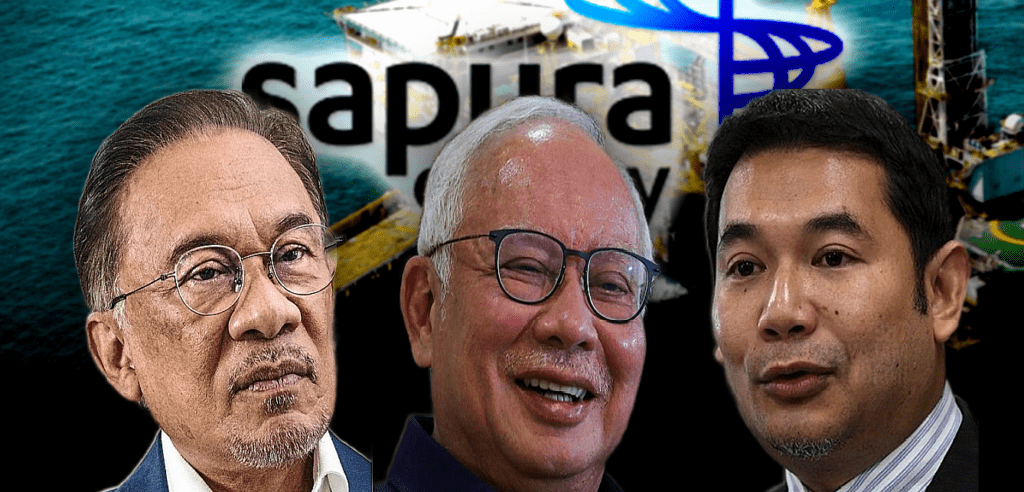
‘Let's rock,’ Najib says after 
Anwar agrees to debate on Sapura...

The debate between former premier Najib Abdul Razak and PKR president Anwar Ibrahim on the financially-troubled Sapura Energy Berhad is going ahead, with Najib upping the ante by offering live media coverage.

This is after Anwar this morning accepted Najib's challenge to debate the matter.

"Game on. I agree to debate with Anwar. Let's rock!

"I have asked Anwar and (PKR man) Rafizi (Ramli) to arrange with the media if they want to stream it live.

"Please contact my aide to find the latest date suitable for all," Najib said on Facebook today.


Taking to Facebook earlier, Anwar said his stand remains unchanged since he first challenged Najib to a debate on the economy over a decade ago, which ultimately did not happen.

"My stand is clear and did not change since more than 10 years ago when I had issued a similar (debate) challenge to him, which went unheeded.

"Now he chose to challenge me during early Ramadan, after failing to answer Rafizi Ramli's rebuttals on the issue of Sapura's 'bail out' at a time when the poor and small traders are not cared for," said the opposition leader.

“I am ready to face and debate Najib Razak at any time for the people and country.”

Rafizi previously claimed Najib was "afraid" after the Pekan MP set a condition for both of them to take their social media sparring on Sapura's financial state into a real debate.

Najib had said he was prepared to accept the debate challenge but added that the PKR vice-president must bring his "boss" along.

"Both of you can be on the same stage to debate with me or you (Rafizi) can assist him (Anwar). Two versus one, no problem," Najib had said.
-

‘I've replied to Rafizi’

In his latest social media post, the Pekan MP said that contrary to Anwar's claim, he has already answered Rafizi's contentions about Sapura.

He said Rafizi's claim that he is proposing to use public funds to bailout elites is untrue because Sapura's demise would hurt 10,000 employees and 4,000 mostly small to medium vendors.

He added that 10.6 million Amanah Saham Bhd depositors are also exposed through Permodalan Nasional Bhd (PNB), which holds majority shares in Sapura Energy.

He said his proposal was not to give Sapura the money but for government to guarantee a working loan to Sapura by banks, similar to how Air Asia was offered an RM500 million government guarantee for its working loan.

Najib's second proposal is for Petronas to take over Sapura Energy and turn around the company. "These two suggestions have no impact on the government's annual budget and do not involve an injection of public funds to Sapura," Najib said.


Instead, he said, the Pakatan Harapan government had bailed out elites when PNB pumped in RM2.7 billion in January 2019, to become Sapura's biggest shareholder and turn it into a government-linked company.

Further responding to Rafizi, Najib said he was silent when Sapura's top management received fat paychecks because it was then a private entity.

On Rafizi's suggestion that the government should just allow Sapura management to execute its rationalisation plan, Najib said this could endanger the banking system.

This is because the rationalisation plan presented by Sapura involved seeking banks to write off debts of RM7.6 billion and selling key assets.

"If banks agree to this, it would bring losses to the banking system to the tune of RM7.6 billion - that is three times the losses of Genting HK.

"It will hurt the dividends for the rakyat's savings and the local stock market," he said.


But if banks refuse to write off the debt, Sapura will face bankruptcy, hurting employees and destroying the local oil and gas vendor ecosystem, he said.

"So, I have answered all three of Rafizi's contentions with facts and evidence. Did Rafizi lie to Anwar?" he asked.

Sapura Energy is a public-listed company but has received large investments from state-owned PNB, which is in charge of funds such as Amanah Saham Bumiputera and Amanah Saham Malaysia.

PNB holds a 40 percent stake in Sapura Energy, which had increased from slightly more than 10 percent in 2018 as it continued to pump money into the firm facing financial challenges.

However, Sapura Energy has recently required further financial help, raising questions if PNB will have to pump further funds to get the firm out of its financial woes.- mk

cheers.

02 April 2022

Salam Ramadan...


Pelik tapi benar...


"Saya tak jadi PM kerana Muhyiddinlah. Sekarang ini dia minta tolong orang 
yang dia tikam belakang tapi tak mati lagi, dia minta tolong (jadi perdana menteri)" – Dr. Mahathir,malaysiagazette. Shouldn't they be in retirement homes?...

Nak jadi TPM kot...

Juara ponteng adalah...tu pun ada hati nak jadi PM...

GE15 in four months, predicts Rafizi...

Former Pandan MP Rafizi Ramli predicts that the 15th general election (GE15) will take place in four months. He told reporters yesterday that he believed this will happen for a number of reasons.

This includes the bipartisan cooperation memorandum of understanding (MOU) with Pakatan Harapan stating that Parliament will not be dissolved before July 31, as well as the closing of the haj pilgrimage season at that time.

“Four months is a short time (from now). And I won’t be surprised if it is held in August or September.

“If I am in Umno, I’d call for the general election to be held by the end of July,” he was quoted as saying by The Star.

In recent weeks, Rafizi has made a splash within his party PKR after revealing that he would contest the party’s deputy president post in the upcoming polls.

This declaration came as a surprise to many as the former Pandan MP had taken a break from politics in 2019, despite being appointed as one of the party’s four vice-presidents.

Rafizi’s return to the political arena comes after Harapan and PKR's failure in four state elections, with the latest one held in Johor.

The 45-year-old had previously lost a fierce contest for the deputy president post to Azmin Ali (who later defected to Bersatu) in the 2018 PKR polls.

Despite his loss, he was appointed vice-president but later decided not to be active in politics.

Rafizi has a reputation for being an outspoken PKR leader and had on several occasions openly criticised the party's decisions.


Focus on the people, not positions

He also revealed yesterday that he was prepared to contest in the parliamentary constituency of Pandan once more if given a green light from the party to do so.

“Politicians must be focused on serving the people. Usually, politicians vie for party posts so that they can land government posts.

“Most are not interested in serving the people. That should not be the case,” he said at a Concorde Club forum.

According to Rafizi, he has received an encouraging response since he unveiled his bid to contest the deputy president post, with his ‘Ayuh Malaysia’ campaign that was launched last Saturday gaining momentum.

Rafizi claimed the movement was kickstarted to attract the support of those who were on the fence, ahead of GE15, and to persuade more individuals to volunteer for PKR. - mk

cheers.